
Common Garage Door Issues in Florida and How to Prevent Them
The Sunshine State offers paradise living — white beaches, diverse wildlife and, of course, year-round sunshine.
However, Florida’s biggest draws for residents can also be their homes’ undoing. The state’s unique coastal environment, laden with salt, sun, humidity and severe storms, acts as a slow and silent killer for home infrastructure.
Understandably, many homeowners don’t notice or act upon minor signs of wear. Instead, many people notice or treat their garage doors only after they have failed completely, or once the damage requires major repairs. Not only can garage door malfunctions lead to expensive emergency repairs, but their downtime also poses safety risks for your home and family.
This article explores everything you need to know about preventing common garage door issues in Florida, including how to identify environmental hazards, DIY prevention steps and the importance of professional maintenance.
What Environmental Conditions Damage Florida Garage Doors?
Florida’s unique climate poses an array of issues for homeowners and their garage doors. Environmental conditions that damage garage doors include:
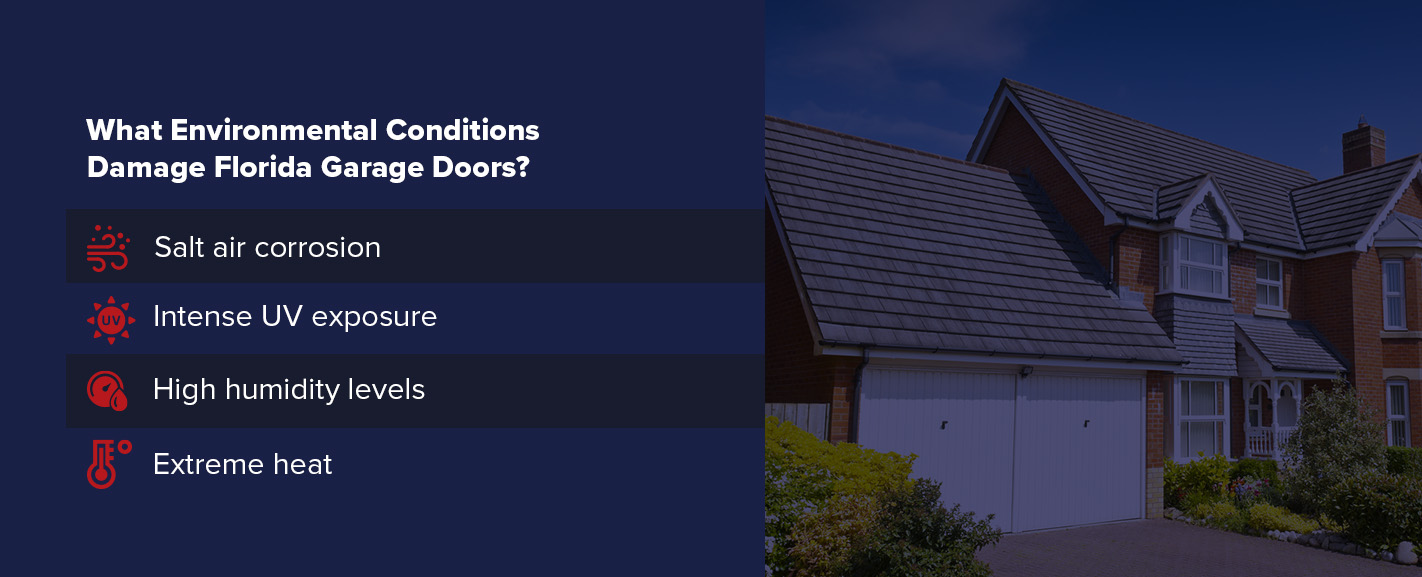
- Salt air corrosion: Florida’s saline air can accelerate the deterioration of many garage door components. Even if your home is not directly on the beach, salty air expedites the development of rust on steel tracks, brackets and springs.
- Intense UV exposure: The state’s year-round sun may be ideal for sunbathing, but it can fade your door’s finishes and weaken its materials, which can lead to brittleness, cracking and warping.
- High humidity levels: High humidity can cause moisture buildup, which, in turn, can cause wood components to warp and swell, as well as damage to photoelectric sensors.
- Extreme heat: With average summer temperatures in the high 80s, the Florida heat can cause metal door elements to expand and lubricants to dry up.
What Are the Most Frequent Garage Door Issues in Florida?
The most common garage door issues in Florida include:
- Spring failure: Florida’s extreme heat cycles, when combined with daily usage, can reduce the lifespan and function of your door’s torsion springs.
- Panel degradation: The state’s high heat, humidity and UV levels can damage your garage door’s protective layer and reduce the functionality of its panels — the interlocking sections that make up the main body of the door.
- Weatherstripping deterioration: High temperatures can dry out weatherstripping vinyl seals, reducing their effectiveness. Ineffective seals can allow pests, hot air and water to enter your garage, which can cause further interior issues.
- Lubricant breakdown: Florida’s extreme heat can cause lubricants to dry out and become less effective. As lubrication is crucial for the functioning of a door’s rollers, hinges and springs, lubricant breakdown can lead to other garage door damage.
- Motor strain: If your garage door has a motor, it will have to work harder in higher temperatures, which could cause it to overheat and potentially malfunction. A garage door’s motor is responsible for its opening and closing, so motor strain impacts its basic function.
- Storm-related complications: Severe storms and hurricanes can cause extreme damage to garage doors, such as flooding and track misalignment.
How Can Homeowners Prevent Common Garage Door Problems?
Although Florida’s extreme conditions can’t be avoided, you can perform preventive maintenance to lower the risk of garage door problems. To protect your garage door, you need to:
- Perform visual inspections: In Florida, noticing minor signs of wear can prevent garage door problems from escalating. Inspect your door periodically for rust, damage to weatherstripping components, loose hardware and increased pest activity.
- Establish a cleaning routine: Regularly use a mild detergent and water to wash your door and remove any buildup of salt and debris to help prevent corrosion.
- Apply proper lubrication: Routinely apply a silicone-based lubricant to your rollers and hinges to ensure they are in good working condition.
- Assess safety features: Perform monthly inspections to make sure all safety features are working. For example, to ensure your sensors are aligned, wave an object in front of a sensor while the door is closing. If the sensor is working, the door should stop closing and reverse. You can check your door’s auto-reverse mechanism by placing a soft object, such as a small block of wood, under the door as it is closing. Upon contact with the object, the door should stop closing and reverse.
Why Is Professional Maintenance Critical for Safety and Longevity?
While you can follow steps to maintain your garage doors, you also need professional maintenance to ensure their safe function and longevity.
Professional maintenance helps you:
- Mitigate physical danger: Some garage door maintenance tasks require professional attention. For example, high-tension spring adjustments require expertise. Dangerous DIY attempts can cause immediate injury, and improper repairs can lead to door malfunctions and injury in the long term.
- Maximize financial ROI: Well-maintained doors offer higher returns on investment than neglected doors. Although investing in professional maintenance incurs costs, it can extend your door’s lifespan and reduce the need for expensive repairs and replacements.
- Diagnose issues correctly: Although DIY inspections can help you identify certain issues, only professionals can assess all garage door issues correctly. Investing in professional maintenance eliminates the guesswork.
- Ensure warranty compliance: Most garage door warranties only permit professional adjustments and treatments. Having professional service records helps you prove that you are caring for your doors in line with your warranty’s terms.
When Does a Damaged Garage Door Require Professional Repair?
In general, it is always safer to enlist a professional to assist with your garage door maintenance and repairs. However, in some circumstances, hiring a professional is nonnegotiable.
You should hire a professional to handle the following garage door repairs:
- Broken spring repair or replacement
- Significant damage to tracks, panels or sensors
- Unusual movements or noises that persist after DIY lubrication
- Structural failure, including snapped cables, off-track rollers or loud grinding noises
- Issues with electrical components, including motors and sensors
Keep Your Home Safe With The Doorman
With over 20 years of experience delivering high-quality garage door solutions to Florida residents, we understand the importance of having a fully functioning garage door. Our hurricane-ready garage doors combine comprehensive impact resistance and outstanding aesthetic appeal for protection you can rely on.
At The Doorman, we are proud to offer the most comprehensive repair and maintenance services throughout Broward County, Palm Beach County and the surrounding area. From spring replacement to weatherstripping repairs, our expert team does it all. To unlock the benefits of preventive maintenance, explore our annual tune-up service, which involves a thorough inspection and maintenance process to ensure every part of your garage door is in premium working condition.
To prevent issues with your garage door, schedule your inspection or upgrade to one of our hurricane-rated solutions today.